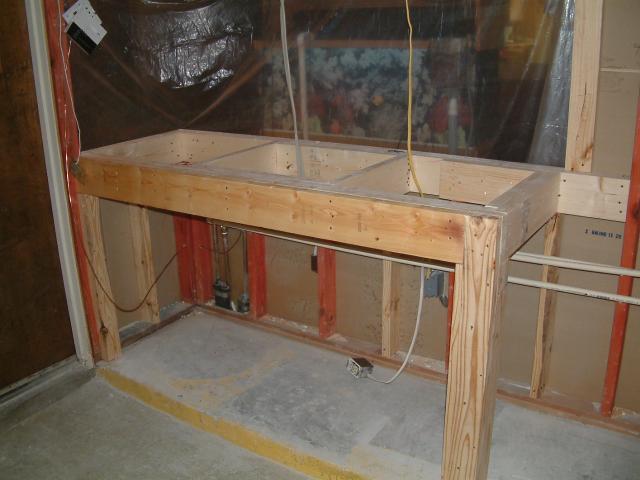
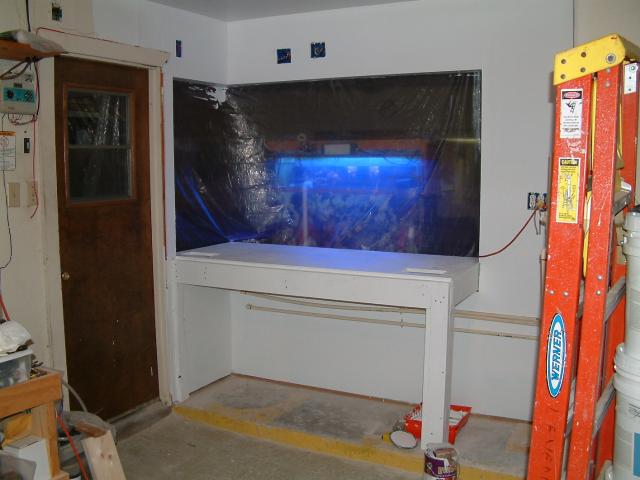
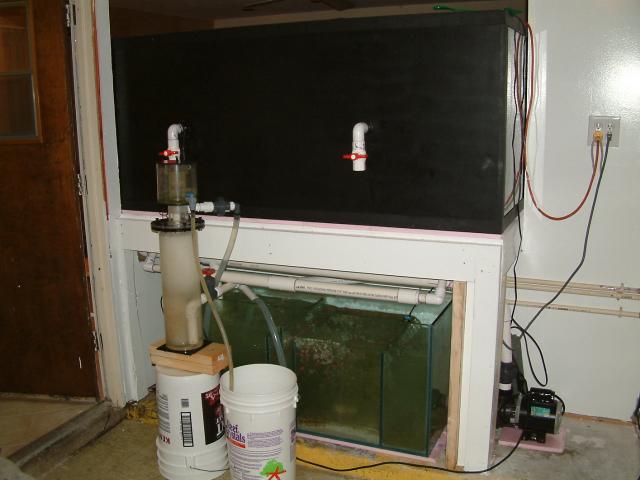
Here are some things to consider for a free standing tank.
The stand needs to be solid. It should be square and level. It should not be able to rock, nor should it be able to rack to the side. Plywood can help immensely in this area.
Don't use treated lumber, because it tends to dry out, crack and warp. If you do use treated lumber, be sure to buy the correct fasteners because the product in the wood will dissolve the screws and bolts in a year's time.
The wooden frame should be bolted together, not nailed. It has to have room for the overflows, something often forgotten during construction. If you can't access the bulkheads, you'll regret it.
Sometimes it is nicer to have the platform larger than the tank. This allows for a walkboard along the back or a place to put a closed loop pump or a simple test kit (or food) when working on & around the tank. By making the stand larger, you have more room for the sump & other equipment, and you can add a little elegance around the three sides of the display tank (front and ends).
Try to incorporate where the power will come in as the stand is designed, so that you can access it easily. An upright in the wrong spot can be a major issue. Electrical should be in an area that is dry and stays dry. Same for ballasts, btw. With the larger stand, such an area can be created with an acrylic splash guard perhaps.